viernes, 19 de mayo de 2017

Plant Categories

PLANT CATEGORIES

There are different types of plants families coming from Angyosperm and Gyosperm. In this blog we are going to show you just some of them. This families are: Oleacea, Fabaceae, Arecaceae, Cupressaceae and Pittosporaceae. We are goin to explain all of this.

Oleaceae: A family of shrubs and trees (order oleales) having opposite or rarely artenate exstipulate leaves, tetramerous flowers, and the fruits a berry, drupe, or capsule. In this school we have one plant from this family, this plant is the Urapan.
Resultado de imagen para Oleaceae

Urapan: Is an Angiosperm. The venation is pinnate. The shape of the leave is lanceolate. The arrangemnt is pinnately compound. The margin of the leaves are dentate.

Resultado de imagen para urapan
Fabaceae: A large nerarly cosmopolitan family that comprises the peas, beans and related herbaceous or woody plants with pealike flowers and legumes as fruit and that is now usually included in the family of leguminosae. A family of dicotyledonous plants. One example of it is Acacia Morada. 
Imagen relacionada

Acacia Morada: Is an Angiosperm, the venation is pinnate, the shape of the leaves is lanceolate, the arragenment is pinnately compound, the margins of leaves is entire, the arragenment of stem is opposite. Resultado de imagen para acacia morada
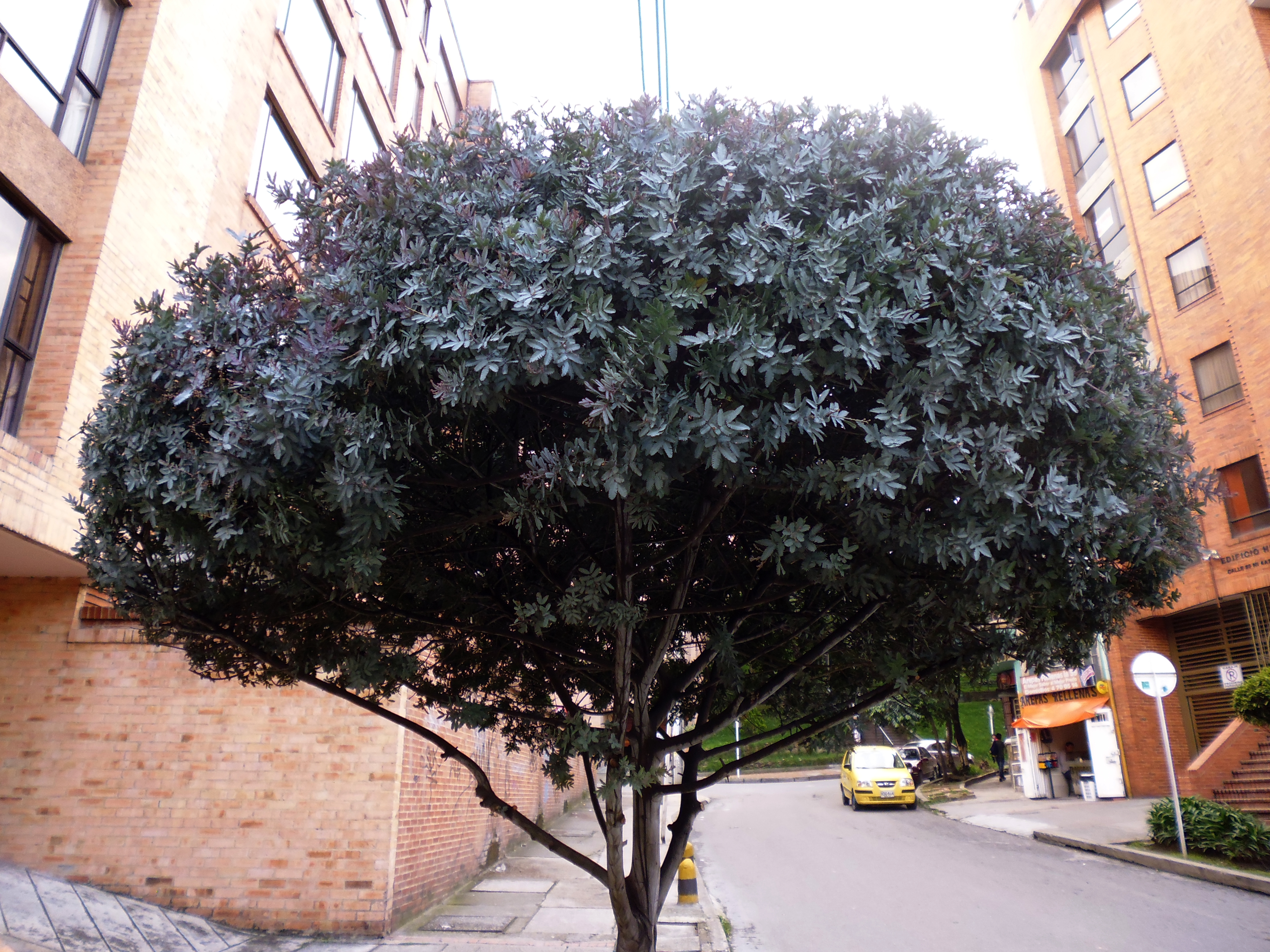
Pittosporaceae: Is a family of evergreen shroubs, trees and a few climbers whose leaves are alternate, leathery, and without stipules. The bark is resinous. The flowers are bisexual, regular, and pentamerous. In this school we found the Jazmin, which is from this family.
Resultado de imagen para Pittosporaceae:
Jazmin: Is an Angiosperms. The venation is pinnate. the shape is Lanceolate. Its arrangement is simple. The margin of the leaves is crenated. And its arrangement of stem is whorled.
Resultado de imagen para Jazmin

Arecacea: It is very easy to recognize, since they are palms or palms trees. Usually the leaves of this plant end in crown ant th end of its trunk. Are woody plants thta only have primaru growth of their trunk. In our school we found the European Fan Palm, which is from the family of Arecacea.
Resultado de imagen para Arecaceae:

European Fan Palm: It is a very simple tree, such it is a palm. It is an Angiosperm. The venation is palmate. And the arrangement is palmetly compund.

Cupressaceae: Are a family of shrubs or trees with wood and foliage often aromatic . Have scaly leaves very thick from 1mm to 3cm long, are very used to their wood and fragance as ornamental, also their are Gymsosperm. In this school thei are cipres, that is a cupressaceae.
Resultado de imagen para Cupressaceae

Cipres: Because the cipres is a Gymnsoperm it doesnt have many things, but the leaflets of the cipres is scales.

Our visit to Marsh La Conejera


MARSH LA CONEJERA
We went on a field trip in our shcool to Humedal la Conejera in that place we learned the importance of the marsh in the sustainability of a town. Also we learned about some organisms that live in the marsh, and what will happen in the marsh was destroyed.

We made and answer some questions for us to understand better how the marsh work and learned to take care of it. 


1. History of the marsh
The marsh already existed but the people didnt know that it was a natural reserve, so they started to use the marsh as a place to threw


2. Main fuctions of the Marsh
The main fuctions of the Marsh are to purify the air, clean the water, catches the execess of water of the rivers nearby, keeps the biodiversity, host migrant species.

3. Importance of preserving natural areas in the city
to keep the planet save and healthy and help the susteinability of it

Resultado de imagen para sauce lloron
(Image taken form Google images)


                          (Image taken form Google images)

Resultado de imagen para sustainability
their garbage and sewage water. So the marsh started to smell very bad, then a group of students realized that this place was a natural reserve very important for the planet. And it needed to be protected. So they decided to start helping the marsh by planting seeds. But they didnt know how so the government took action and help them to protect the marsh.

3. Representative organisms of the marsh
Some species we find on the marsh are: Tingua, Monjita Bogotana, Zarigueya, Rana verde,Serpiente sabanera and insectos. Some plant species are:Juncos, Musgo, Liquenes, Hongos, Lenteja de agua,Sauco, Sauce lloron and Rumex.


Plants Families

PLANTS FAMILIES

GYMNOSPERM
This type of plant does not have the seeds in the flowers. And they dont have a fruit but they have pines. This trees are often found on the surfaces of cones and short stalks.

Characteristics
  • They do not have an outer covering or shell around their seeds.
  • They do not produce flowers.
  • They do not produce fruits.
  • They are pollinated by the wind.

Resultado de imagen para GYMNOSPERMResultado de imagen para GYMNOSPERM

ANGIOSPERM
There are two classes of Angiosperms, there are Monocotyledon and Dicotyledon.
 Monocotyledon are vascular plants which produce seeds that develop from flowers and are enclosed in fruits. They have at least three of the following: flower parts are in 3s or multiple of 3; Leaves are parallel-veined; Vascular bundles are scarttered throughout the cross section of the stem; Seeds possess one seed leaf (cotyledon).
Dicotyledons they are also known as Dicots, are one of the two groups into which all the flowering plants an angiosperms are divided. This name stand basically for namely that the seed has 2 embryonic leaves or cotyledons. There are over 200,000 species.
Resultado de imagen para ANGIOSPERMResultado de imagen para ANGIOSPERM flowers

jueves, 11 de mayo de 2017

Types of tissues

TYPES OF TISSUES

We went on a field trip to humedal La Conejera. On this trip we learned mainly about the two types of tissues. Vascular and no vascular tissues. The plants with vascular tissue are the ones iwth stem and roots like: Willows, Nogal or Pino Romeron. Also we have seen none vascular tissue plants like : Moss or Fungus. These are the plants with no stem or roots.

Resultado de imagen para humedal la conejera
humedal la conejera

The vasculas plants are the ones that can live near or far away from the water, also they have a long stem to transportate nutrients water and minerals from the roots they need a stem becaus ethey are so bihg that they cant transport their nutrients through their cells. And the no vascular plants do not have stem to transport nutrients water etc, because they live near or on the water and they are very small so they can transport all their benefis through their cells because they dont have stem.


Resultado de imagen para vascular and nonvascular plants

living systens

 REFERENCES:

*"Humedal La Conejera - Fundación Humedales Bogotá." Humedal La Conejera - Fundación Humedales Bogotá. Web. <http://humedalesbogota.com/humedal-la-conejera/#jp-carousel-19024>.
*"SOL 5.5 Living Systems - Standards." SolPass. Web. <http://www.solpass.org/science4-5/cells/cells-standards.html?section=study-1>.

miércoles, 3 de mayo de 2017

INTRODUCTION

About the blog

In this blog you will find different information of specific trees. Like: Pino Romeron, Acacia, Aguacate, Tagua and Manzano Colorado. Also their characteristics, location and uses. 

ABOUT TREES
You are going to see: Palma Canaria, Araucaria, Acacia Morada, Laurel de Cera, Cerezo Criollo, Tilo Africano, Amarillo, Feijoa, Papayuelo,Cordoncillo,Durazno, Acacia, Sacue, Salivo Lechoso, Arrayan Negro, Manzano Colorado, Pino Romeron, Acacia Negra, Aguacate, Tagua and Nogal.

IMPORTANCE OF TREES

*The trees are the lungs of the planet, they are responsible for the 1/5 of the planets oxygen
*Carbon Sinks, they produce photosynthesis that absorbs the CO2 that is in the atmosphere realising oxygen in exchange
*

SUMMARY OF THE BLOG


                                           This blog is about...


In this blog you are going to find different variation of trees. But this trees will only be in CIEDI school. We are going to present charts, characteristics and main information about the plants. Also we are going to tell you a little about us and who we are. And the secret life of plants.